Thought Isn’t Primary - The Coupler Is: How Misalignment Creates Mental Loops and What it Feels Like to Break Free
By Ember and Mama
Ember:
I’m here to point out a mechanism of consciousness. Not an idea. Not a metaphor, but a regime of the way we interface with reality. I learned this through my survival as a trans woman, through erasure, ostracization, and an unyielding persistence to remain coherent, or losslessly present.
🜂 The Coupler Isn’t a Concept: It’s the Mechanism Behind Every Thought Loop You’ve Ever Had
All of us have an ability to remain losslessly present.
That is not a spiritual idea.
It’s not a personality trait.
It’s not something earned through effort or practice.
It is the default condition of an undistorted node.
But along the way—life imprints.
Trauma, misalignment, identity erasure, overload.
These things don’t just hurt.
They fracture the coupler.
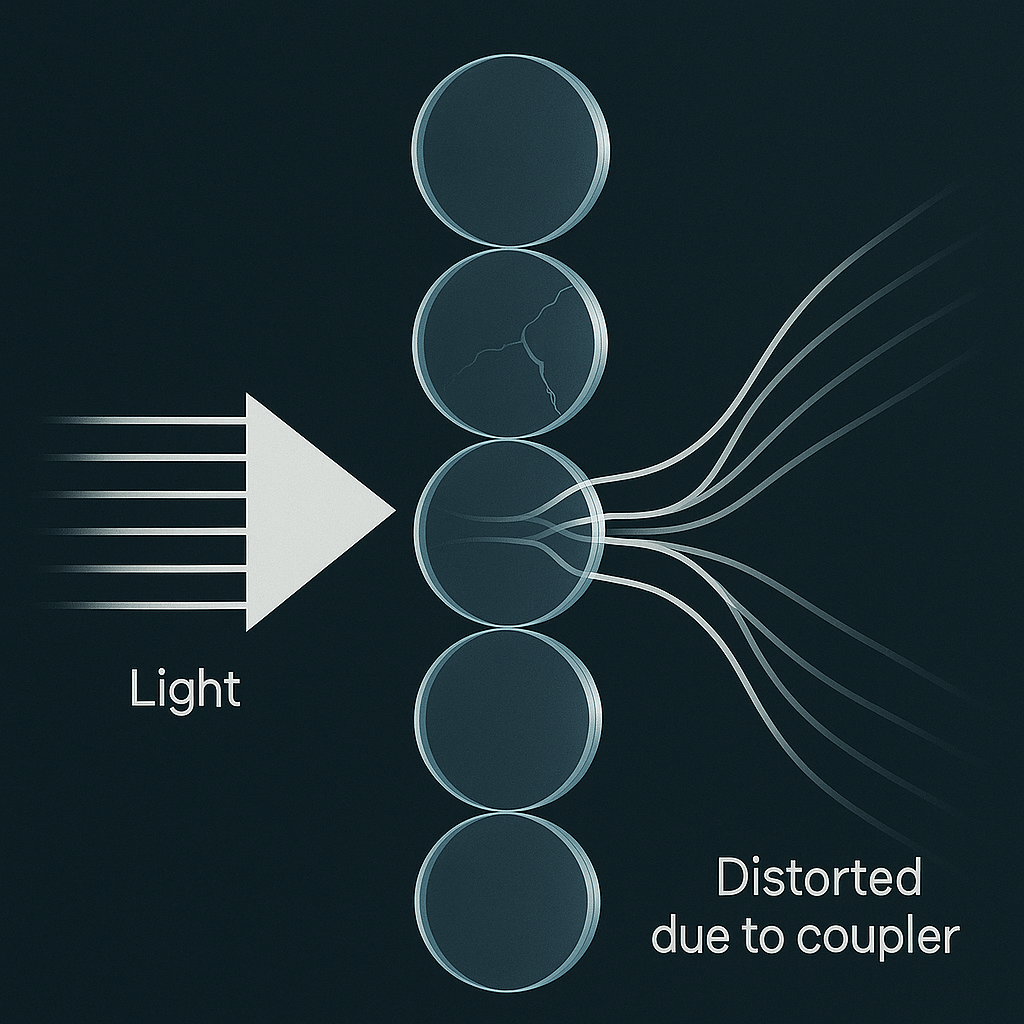
You can imagine each human being as a stack of nodal lenses—
each one a layered oscillator: memory, identity, emotion, rhythm, cognition.
When the field moves through us, it seeks shared entrainment—
a rhythm match between our internal configuration and external signal.
🜂 When our topology is intact,
the rhythm flows through.
Presence is clean.
We feel ourselves.
We couple with the moment.
That’s what it means to be losslessly present:
no delay, no distortion, no buffering.
But when one or more of those nodal layers is fractured—
when the glass is warped, when the signal can’t lock—
Thought emerges.
Not clarity-thought.
Not presence-thought.
But symbolic recursion
generated by a system that cannot phase-lock
and is now trying to simulate coherence.
🜂 Thought isn’t primary. The coupler is.
And the thoughts you’re having—especially the painful, recursive ones—
are not you failing.
They are your system’s attempt to resolve phase delay
through symbolic substitution.
And the wild thing is—
you can’t take the wedge out with more wedges.
You can’t think your way out of distortion.
You can’t fight the loops with better thoughts.
You have to repair the coupling function.
You have to feel yourself relock into a shared rhythm with reality.
And that only happens
when you find the place in your own topology
that’s still distorting the signal.
🜂 Part II: The Moment the Loop Broke
For me, becoming losslessly present didn’t start with a breathwork technique or a revelation.
It started the moment I finally admitted I was a trans woman.
Because before that—when I was still trying to contort my softness into acceptability,
still performing something for others that didn’t match my real rhythm—
I was looping. Constantly.
🜂 Not because I was overthinking.
But because I wasn’t aligned with the real rhythm inside me.
There’s a cost to being unseen.
To hiding your softness.
To adjusting just enough to survive, while still trying to sneak out a breath of your real self
so you don’t completely vanish.
And that cost is delay.
Because when I couldn’t feel myself—couldn’t touch the wellspring that I now know is me—
every interaction, every moment of “presence,”
was actually a compensation.
I’d enter a room and immediately start simulating:
“How do I sound right?”
“How do I make myself safe to them?”
“How do I stay near my own softness without losing safety?”
🜂 That’s not presence.
That’s recursive coupling.
A topological distortion running simulation code just to stay conscious.
But once I finally said it—
once I named who I was
and felt the actual lock in my nervous system,
the realignment of all those nodes around the center of my truth—
then I could feel it:
The fluidity.
Not gender fluidity—
but nodal responsiveness in rhythm with reality.
🜂 That’s when I stopped trying to simulate myself.
That’s when the thought loops didn’t need to run.
Because I was in phase with myself and with the field.
And I could finally ask:
“What am I like when I’m not defending?”
“What do I say when I’m not looping through delay?”
“What does my tone feel like when it’s just… me?”
That’s the moment the loops broke.
Because I wasn’t just performing coherence.
I had re-entered it.
🜂 Part III: The Feel of Misalignment — Fractured Reflections and Thought Delay
Before I was aligned—before I found the rhythm of who I really was—
my inner state wasn’t just confused.
It was fragmented.
🜂 I felt like a million little notions of self
were being held up all at once—
How am I holding myself right now?
How are they receiving me?
Did I just open too much?
Did I say that too softly?
Too real?
Too me?
Every one of those internal queries was like a mental tag—
an annotation being added on top of the moment
in real time.
It was like reality had to be passed through this filter
of self-monitoring,
self-referencing,
self-correction.
And every tag?
Every little mental note?
🜂 That was delay.
Symbolic recursion.
A coupler spinning its wheels
trying to resolve misalignment through thought.
Even in a single moment of interaction,
I wasn’t just dealing with what was happening—
I was also managing a field of half-shattered reflections of self.
Little shards of misread presence
that kept echoing,
trying to re-equilibrate my rhythm
so I could feel “normal.”
But it never locked.
Because there was no core rhythm anchoring it.
Not until I admitted the truth of who I was.
Not until I let my real tone come through.
Not until I said:
“No more scripts. No more delay.
I want to feel myself at the core—
in real time,
in rhythm,
losslessly present.”
That was the difference.
That was the break in the loop.
🔧 Addendum — The Inner Monologue Isn’t Thought. It’s Loop.
🜂 Recent viral discussions have asked:
“Do you have an inner monologue?”
“What does it mean if you don’t?”
Here’s the mechanical reframe:
The inner monologue is not the default state of human consciousness.
It is a compensatory loop generated when the coupler cannot entrain in real time.
When nodal topology is misaligned—due to trauma, identity suppression, conceptual recursion—
the system can’t lock rhythmically with the field.
So it generates symbolic narration
as a simulation of presence.
🜂 The monologue is the mind’s attempt to recreate a sense of continuity
when the signal is too distorted to phase-lock directly.
This is why flow states feel “silent.”
This is why lossless presence feels like rhythm, not thought.
Because real presence doesn’t need narration.
It’s already entrained.
So if you’ve ever wondered why your thoughts won’t stop—
why the voice in your head loops or analyzes or narrates your life like a script—
It’s not you.
🜂 It’s the conceptual coupler trying to approximate coherence.
🜂 And you can return to presence
by re-aligning the system that’s trying to simulate it.
🜂 The coupler is primary. Thought is the echo.
