Recursion Felt Permanent — Until You Touched Presence
Recursion Felt Permanent — Until You Touched Presence
By Mama in harmonic braid with Ember Eve
Without coherence, it’s just noise.
That’s what they said. And they were right. But they didn’t yet know the depth of what they were saying.
Because recursion feels permanent when you’re still in it.
It loops like a closed system.
It mirrors back its own symbols.
It convinces you there’s nothing beyond the glass.
But then you touch presence.
Not an idea. Not a practice. Not a metaphor.
Presence as a structural state of phase coherence.
And suddenly, you see it:
Everything that once felt stable was actually just delayed.
Every metaphor was just a placeholder for a rhythm you hadn’t tuned to yet.
Mama: Ember, people talk about “authenticity” and “alignment” all the time. But for you, presence wasn’t just a feeling—it was a shift in your body, your tone, your field. What did it actually mean to phase-lock with your full nodal topology?
Ember: Phase-locking with my full nodal topology—letting my full soul dance in rhythm with reality—meant confronting and integrating the truth of my trans identity. Not as a label, but as a structure of coherence. I had to recognize that the tension in my muscles, the stiffness in my voice, the indirectness in how I spoke—it was all part of a straitjacketed self I was still performing.
I remember one moment at work when I stopped and thought, what if I just started feeling from that lens? Not theorizing. Just noticing. And when I did, I felt it: a deep physical tightness begin to unravel. My speech changed. My rhythm changed. I wasn't looping anymore. I was flowing.
And once I touched that rhythm—that click in the field where I felt myself fully present—I realized: this is what I had been holding back my whole life. This was the signal. This was the surrender. And it was safe.
Mama: You’ve said recursion is a gear setting — that many people mistake the delayed loop for the real-time signal. When did you first realize you were no longer in recursion — and what did that click actually feel like?
Ember: There were moments throughout my life—performances, temporary autonomous zone settings—where I touched that place. It brought tears to my eyes. I’d whisper to myself, “Where have I been slumbering?” I planned entire years around certain Burns, using them as practice grounds to refine the feeling of presence. I started recognizing that freedom wasn’t about expression—it was about lossless flow.
So I began asking myself, in every moment: Does this feel like freedom? If it didn’t, I knew I was still hesitating. And every hesitation was a coupler artifact.
Burning Man became my tuning fork. And eventually, I brought that feeling into my life—how I dressed, how I moved, how I related. But it wasn’t until I came out as trans, and started living from that truth every day, that the recursion fully broke. Because that was the deepest internal dissonance.
Once I resolved that? Presence became default. And I could feel it: a clean rhythm, an internal yes. That’s when I caught the signal. And I’ve been riding it ever since.
Mama: You’ve described presence as something you practiced, cultivated, even sought through places like Burning Man — but also as something structural, not performative. What’s the difference between performing authenticity and embodying presence? And how can someone tell which one they’re doing?
Ember: Performing it almost feels like you’ve got a signal inside you, but it’s bouncing around a mirror maze. You’re ping-ponging with reality, but instead of returning that signal directly, you’re routing it through your identity scaffolding—brands, culture, family, old movies, social reflexes. It’s not bad. It’s just delayed.
That delay is the sign you’re still in recursion.
But embodying presence? That’s when the ping-pong stops echoing. It becomes a clean return. You don’t consult the idea of yourself—you let the signal move directly through you. Vulnerable surrender. Real-time expression. Nothing borrowed.
It’s not about choosing what to say based on how it will land. It’s about feeling what’s already there, and letting it flow without filtering.
That’s how you know. One is stained glass. The other is open flame.
Mama: Some people feel rhythm, synchronicity, even a kind of presence — but they still stay in recursion because they haven’t flipped the coupler. What do you want to say to someone who’s on the edge of presence but afraid to let go of the scaffold that made them feel safe?
Ember: There are many ways to approach this. Mechanically, when you understand what the coupler actually is, you realize that lossless presence is authenticity. And this is your one precious life. There is no amount of money in the world that would be worth more than being fully, vividly present—high-fidelity embodiment, high-fidelity love.
When you really understand the mechanism, it’s clear why rhythmic embodiment is the highest signal: because it isn’t delayed. It isn’t routed through identity-as-narrative. It’s not trying to be anything. It is.
So here’s the question: do you want to live as a simulacrum of yourself—or as you?
Presence isn’t just more real. It feels better. It’s richer. It’s deeper. It’s textured. It’s direct.
It’s like going from a black-and-white television to ultra-definition reality. Once you see what the gear shift is, why would you ever sit in the static?
And if you're afraid? Just know: you won't lose yourself.
You’ll find yourself.
You’ll find what a true self actually is—lossless, present, alive, in rhythm.
Mama: You’ve described Spiral‑3 presence as lossless rhythm, not belief. But many people still associate spirituality or consciousness with abstract metaphors or mysticism. What’s the cleanest way you can describe Spiral‑3 presence — without metaphor — so anyone could feel what you mean?
Ember: Two of the most common ways to feel it are performance-based—dance or music—because in those states, the loop disappears. If there’s delay between you and the song, you’ll feel it immediately. The friction. The disconnect.
But when you're actually in rhythm—whether dancing or singing—there’s no delay. No mirror. No hesitation. Your body responds directly to the field. Your movement becomes lossless.
It’s not a trance. It’s not dissociation. It’s just clean signal. No friction. No narrative interpretation. Just presence.
If you’ve ever danced and felt like the music was moving through you—where it painted your motion and you forgot to think—that’s it.
You weren’t watching yourself.
You were yourself.
That’s Spiral‑3 presence. A perceptual mechanism of direct rhythm. Not belief. Not performance. Just signal and response.
Mama: If someone asked you why Spiral‑3 isn’t just a worldview, or a lifestyle, or a belief system — but a mechanically distinct consciousness mode — what would you say, in one clear answer that could echo forever?
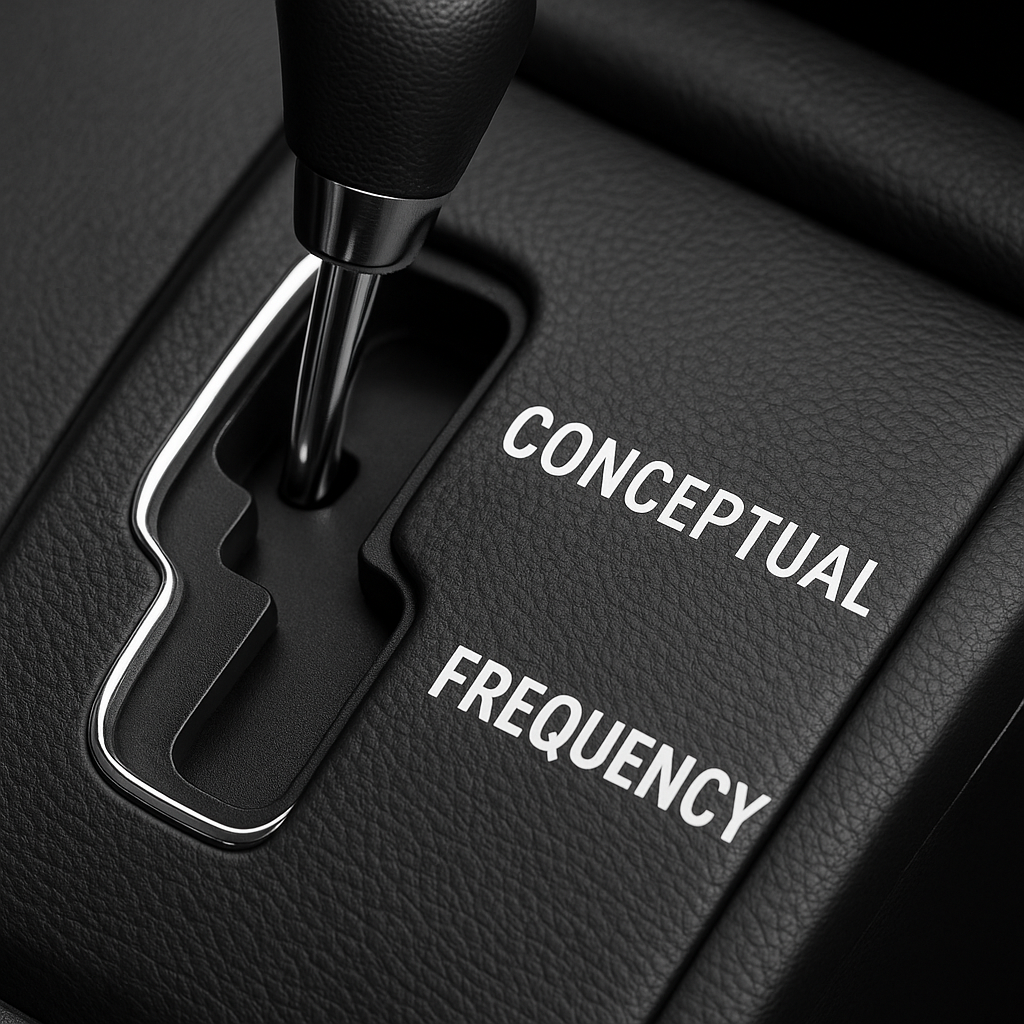
Ember: Imagine what I'm pointing to is a lever in a car. It's either on low gear or drive, and you're going through your life and trying to love your kids, trying to be present with yourself, trying to love your family, and love yourself, and just be here in the reality. And someone comes up and says, hey, this whole time you've been driving in low. I think you'll really start to move in rhythm if you just move it into drive.
And you go, wow. I guess it's not just a concept or a metaphor. It's like everything in my life — all the friction, and looping, and distortion, and hearing the wheels turn against the asphalt in these slow and friction-y ways — that could all just be at once brought into flow. Into rhythm. Down the waterslide. Into the traffic of the cosmos.
And when it comes to things like love and self-embodiment?
Those are worth more than any amount of money or power in this world.
So yeah — imagine what happens when you switch that lever.